
Failed Your Driving Test? Learn Why & How to Ace It!
Facing the disappointment of a failed driving test is a common experience for many new drivers in Orangeville and across Ontario. While it can be disheartening, it’s crucial to view it as a learning opportunity. Understanding the common reasons for failing can provide valuable insights and help you focus on the areas that need improvement, ultimately leading to success on your next attempt. Let’s explore some key factors that often contribute to test failures and how you can prepare more effectively. Visit our website for more information.
Common Critical Errors Leading to Test Failure
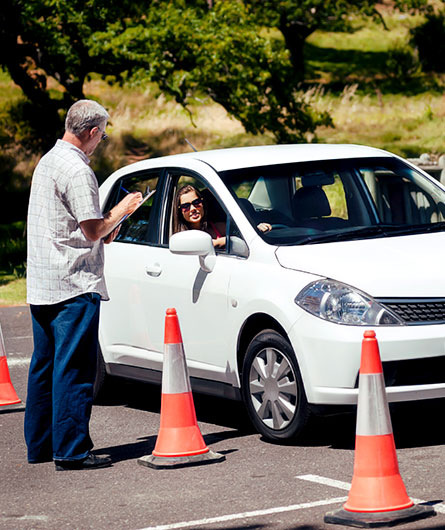 During your driving test, certain mistakes are considered critical errors, resulting in an immediate failure. These errors typically involve actions that pose a direct and immediate risk to the safety of yourself, the examiner, or other road users. Recognizing and avoiding these critical errors is paramount to passing your test.
Improper Lookout and Observation
Failing to consistently and effectively check your surroundings is a frequent cause of critical errors. Examiners are meticulously observing your mirror usage, blind spot checks, and overall awareness of potential hazards. This includes not checking mirrors frequently enough while driving straight, forgetting to check blind spots before changing lanes or merging, and not scanning intersections thoroughly before proceeding. Remember, a quick glance isn’t sufficient; you need to demonstrate a deliberate and comprehensive scanning pattern to show you are constantly aware of your environment and potential risks. Neglecting proper lookout can easily lead to a dangerous situation, which is why it’s considered a critical error.
Another aspect of improper observation is failing to react appropriately to what you see. For example, if you don’t notice a pedestrian waiting to cross or a cyclist approaching, and therefore don’t adjust your speed or position, this demonstrates a lack of proactive awareness. Examiners want to see that you are not just looking but also processing information and making safe driving decisions based on your observations. Consistent and effective observation habits are not just for passing the test; they are fundamental to safe driving for life.
To improve your lookout skills, consciously practice exaggerated mirror checks and blind spot checks during your driving lessons and independent practice. Verbalizing what you are seeing can also help reinforce the habit and demonstrate your awareness to your instructor or accompanying driver. Pay extra attention to intersections, pedestrian crossings, and areas with potential hazards, ensuring you are scanning thoroughly before making any moves.
Speeding and Improper Speed Management
Exceeding the posted speed limit is a clear critical error. Examiners are strict about adhering to speed limits in various zones, including residential areas, school zones, and on highways. It’s not just about the number on the sign; it’s also about adjusting your speed to the prevailing road conditions. Driving too fast in adverse weather, heavy traffic, or construction zones, even if you are technically under the limit, can also be considered a critical error as it demonstrates a lack of safe speed management.
Maintaining a consistent and appropriate speed is crucial. Examiners will also note if you are driving significantly below the speed limit without a valid reason, as this can impede traffic flow and potentially create hazards. The key is to maintain a speed that is both legal and safe for the current conditions. Pay close attention to speed limit changes and adjust your speed smoothly and promptly. Regularly check your speedometer to ensure you are within the limit and be prepared to adjust your speed based on traffic, weather, and road conditions.
Practice driving in various speed zones around Orangeville to become comfortable with recognizing and adhering to different speed limits. Pay attention to road signs and use landmarks to develop a sense of appropriate speeds. During your practice drives, ask your instructor or accompanying driver for feedback on your speed management and make a conscious effort to maintain safe and legal speeds in all situations.
Right-of-Way Violations
Failing to yield the right-of-way when required is another common critical error. This can occur in various situations, such as at intersections (with or without traffic lights or stop signs), when merging onto highways, or when encountering pedestrians or cyclists. Understanding and correctly applying right-of-way rules is essential for safe and courteous driving. Examiners will be closely watching how you handle these situations to ensure you prioritize the safety of other road users.
Common right-of-way violations include proceeding through a stop sign without coming to a complete stop, failing to yield to oncoming traffic when turning left, not yielding to pedestrians in crosswalks, and improperly merging onto a highway without adequate speed or gap. These actions can lead to collisions and demonstrate a lack of understanding of fundamental traffic laws. It’s crucial to approach every right-of-way situation with caution and ensure you are giving way when required.
Review the rules of the road regarding right-of-way thoroughly. Practice different scenarios with your driving instructor to gain confidence in applying these rules correctly. Pay close attention to signage and road markings that indicate who has the right-of-way. When in doubt, it’s always safer to yield. Developing a cautious and respectful approach to right-of-way situations will not only help you pass your driving test but also make you a safer and more considerate driver.
Other Common Mistakes to Avoid
While critical errors lead to immediate failure, other less severe mistakes can accumulate and also result in an unsuccessful test. These are often related to vehicle operation, lane positioning, and general driving habits. Addressing these areas is crucial for a well-rounded driving performance.
Poor Vehicle Control
Demonstrating smooth and precise control of the vehicle is essential. This includes steering smoothly, accelerating and braking gently, and maintaining a consistent speed. Jerky steering, abrupt braking, and inconsistent acceleration can indicate a lack of confidence and control. Examiners want to see that you can operate the vehicle safely and competently in various situations. Practice smooth transitions between pedals and maintain a firm but relaxed grip on the steering wheel. Pay attention to maintaining a consistent speed, especially on straightaways and during turns.
Proper clutch control (for manual transmissions) is also critical. Stalling the vehicle frequently or demonstrating jerky gear changes can indicate a lack of proficiency. If you are taking your test in a manual vehicle, ensure you have mastered smooth clutch engagement and gear shifting. Practice starting, stopping, and changing gears smoothly and efficiently.
Regular practice in diverse driving conditions will help you develop better vehicle control. Focus on smooth and deliberate movements. Ask your instructor for specific feedback on your vehicle handling and work on refining your technique until it becomes second nature.
Improper Lane Positioning and Turns
Maintaining the correct lane position and executing turns safely and accurately are crucial aspects of driving. This includes positioning your vehicle correctly within your lane (not drifting or crowding lane markings), making smooth and properly timed lane changes, and entering and exiting turns correctly. Examiners will be observing your lane positioning on straight roads and your approach and execution of turns at intersections.
Common mistakes include drifting within the lane, making excessively wide or tight turns, not signaling lane changes or turns correctly and in advance, and failing to check mirrors and blind spots before changing lanes. Ensure you are positioning your vehicle in the center of your lane, using your mirrors and signals effectively, and executing turns smoothly and within your lane. Pay attention to road markings and signage that indicate lane usage and turning requirements.
Practice different types of turns at various intersections in Orangeville. Focus on approaching turns in the correct lane, signaling appropriately, maintaining a safe speed, and steering smoothly through the turn while staying within your lane. Pay attention to your positioning before, during, and after lane changes, ensuring you are doing so safely and without impeding other traffic.
Insufficient Speed in Merging or Entering Traffic
Hesitation or a lack of confidence when merging onto highways or entering traffic from a stopped position can be problematic. You need to demonstrate the ability to accelerate appropriately to match the speed of existing traffic and merge smoothly and safely. Examiners will be looking for your ability to judge gaps in traffic, accelerate effectively, and integrate into the flow without causing other vehicles to slow down or take evasive action.
Common errors include entering a highway at too slow a speed, causing a dangerous situation for other drivers, or hesitating for too long at an intersection, disrupting traffic flow. Practice merging onto highways and entering traffic from various starting points. Focus on accelerating smoothly and efficiently to reach the appropriate speed and choosing a safe gap to merge or enter. Use your mirrors and signals effectively to communicate your intentions to other drivers.
Seek guidance from your driving instructor on the proper techniques for merging and entering traffic safely and confidently. Practice these maneuvers repeatedly until you feel comfortable and proficient in judging speeds and gaps. Remember, the goal is to integrate smoothly into the existing traffic flow without causing any disruption or safety concerns.
Failing your driving test doesn’t mean you’re not capable of becoming a good driver. It simply highlights areas where you need further practice and refinement. By understanding the common reasons for failure and focusing on improving these skills, you’ll be well-prepared to ace your next driving test in Orangeville. Visit our website for more information.
Read more about DriveWise at: https://www.drivewiseorangeville.com/